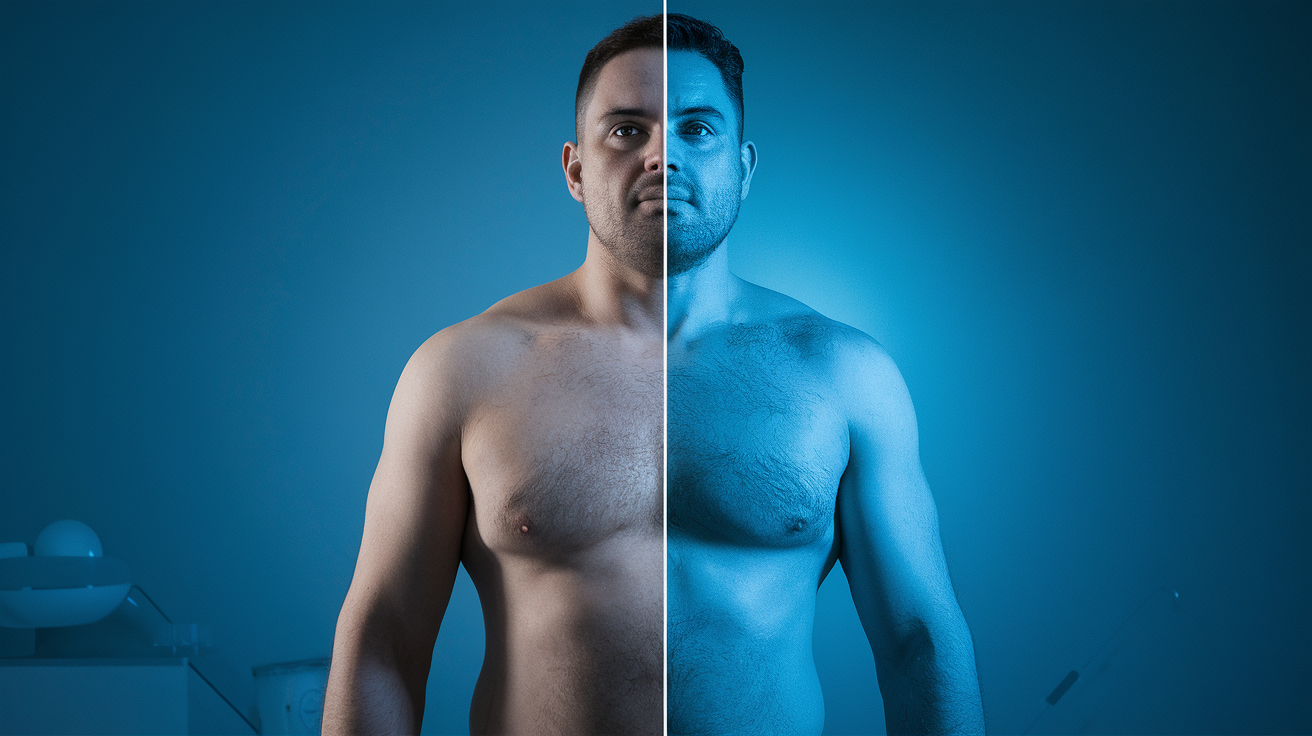

Here's something that might surprise you: bariatric surgery doesn't just change how you look — it can literally change how you breathe at night. For people struggling with both obesity and sleep apnea, weight loss surgery has emerged as one of the most effective treatments we've seen.
I've watched patients go from using CPAP machines every night to sleeping peacefully without any equipment at all. But the journey isn't always straightforward, and there's a lot more to understand about this connection than you might think.
Why Weight Drives Sleep Apnea in the First Place
The relationship between weight and sleep apnea isn't just correlation — it's direct cause and effect. When you carry extra weight, particularly around your neck and upper body, it creates a domino effect that impacts your airway.
Think of your throat as a flexible tube. Extra tissue around your neck acts like a squeeze on that tube from the outside. Meanwhile, fat deposits in your tongue and the soft tissues of your throat narrow the passage from the inside. During sleep, when all your muscles naturally relax, this narrowed airway becomes prone to collapse.
What's fascinating is how dramatic this effect can be. Research suggests that even a 10% increase in body weight can increase your risk of developing moderate to severe sleep apnea by six times. That works in reverse too — which is exactly where bariatric surgery comes into play.
How Bariatric Surgery Tackles the Root Problem
Bariatric surgery approaches sleep apnea from a completely different angle than traditional treatments. While CPAP machines and oral appliances work by keeping your airway open mechanically, weight loss surgery addresses the underlying anatomical changes that cause the problem.

Visual overview: Key facts about bariatric surgery and sleep apnea improvement
The improvements happen on multiple levels:
- Reduced neck circumference: As you lose weight, the external pressure on your airway decreases significantly
- Less tongue and throat tissue: Fat deposits in your upper airway shrink, creating more space for breathing
- Improved lung function: Less abdominal weight means your diaphragm can work more efficiently
- Better oxygen levels: Overall cardiovascular improvements enhance your body's oxygen processing
But here's what many people don't realize: you don't need to reach your goal weight to see sleep apnea improvements. Many patients notice breathing changes within the first few months after surgery, often before they've lost even half their excess weight.
What the Research Actually Shows
The numbers around bariatric surgery and sleep apnea are genuinely impressive. Studies consistently show that 60-90% of patients experience significant improvement in their sleep apnea symptoms after weight loss surgery. Many can reduce or eliminate their CPAP usage entirely.
A landmark study published in 2025 followed over 2,000 bariatric surgery patients for five years. The results were striking: 75% of patients with moderate to severe sleep apnea saw their condition improve to mild or resolve completely. Even more encouraging, these improvements typically lasted throughout the follow-up period.
Yet there's an important caveat here. While the majority of patients improve dramatically, complete resolution isn't guaranteed for everyone. Factors like your starting severity, age, and underlying facial structure all play a role in determining outcomes.
Some patients find they still need treatment but can switch to less intensive options. Instead of a CPAP machine, they might be candidates for treatments like oral appliances or even surgical options such as UPPP surgery or Inspire therapy.
Timeline: When to Expect Improvements
One of the most common questions I hear is: "How quickly will my sleep apnea improve?" The answer varies more than you might expect, but there are some general patterns.
First 1-3 months: Many patients notice they're sleeping more soundly, even if sleep studies don't show dramatic changes yet. This often correlates with losing 15-25% of excess weight.
3-6 months: This is where the real magic happens. Most patients see measurable improvements in their sleep study results. Some can start reducing CPAP pressure settings or transitioning to less intensive treatments.
6-12 months: By this point, patients who are going to see major improvements usually have. Many achieve normal or near-normal sleep study results.
Beyond one year: Results typically stabilize here, though maintaining weight loss remains crucial for sustaining the benefits.
Keep in mind that your healthcare team will want to monitor your progress carefully. Don't make changes to your CPAP settings or stop treatment without medical supervision — your sleep apnea could still be dangerous even as it's improving.
Do Different Surgeries Produce Different Outcomes?
You might wonder whether the type of bariatric surgery matters for sleep apnea improvement. The research suggests that while all major procedures can be effective, there are some interesting differences.
Gastric bypass (Roux-en-Y) tends to produce the most dramatic and rapid improvements, likely because it typically results in faster initial weight loss and has hormonal effects beyond just restriction.
Sleeve gastrectomy also shows excellent results, particularly for sleep apnea improvement. Many surgeons prefer this approach because it's technically simpler while still delivering substantial benefits.
Adjustable gastric banding can be effective too, though improvements tend to be more gradual and closely tied to the amount of weight lost.
The key insight? The amount of weight you lose matters more than the specific surgical technique. That said, discussing your sleep apnea specifically with your bariatric surgeon can help inform the best choice for your situation.
What About Other Surgical Alternatives?
While bariatric surgery can be incredibly effective, it's not the only surgical approach to sleep apnea. Some patients are better candidates for procedures that directly target the airway instead of focusing on weight loss.
For example, if you have structural issues like enlarged tonsils or a deviated septum contributing to your sleep apnea, procedures like tonsillectomy or septoplasty might be more appropriate first steps. Others might benefit from turbinate reduction or more comprehensive procedures.
The decision often comes down to your individual anatomy and the severity of both your obesity and sleep apnea. This is where working with a comprehensive team — including both sleep specialists and surgeons — becomes invaluable. You can explore more options in our sleep apnea surgery guides.
Setting Realistic Expectations
While I'm genuinely enthusiastic about the potential of bariatric surgery for sleep apnea, I'd be doing you a disservice not to discuss some important considerations.
First, bariatric surgery is major surgery with real risks and a significant recovery period. The decision should never be made lightly or solely for sleep apnea — though it can certainly be an important factor in your decision-making process.
Second, success depends heavily on your commitment to post-surgery lifestyle changes. The patients who see the best long-term results are those who embrace the dietary changes, exercise recommendations, and follow-up care that make bariatric surgery successful.
Third, while sleep apnea improvement is common, it's not guaranteed. Some patients find their sleep apnea improves but doesn't resolve completely. Others might see great initial results that partially return if they regain some weight over time.
Working with Your Medical Team
If you're considering bariatric surgery as a treatment for sleep apnea, coordination between your various healthcare providers becomes crucial. Your sleep medicine doctor, bariatric surgeon, and primary care physician all need to be on the same page.
Before surgery, make sure your sleep apnea is well-documented with recent sleep studies. This gives you a clear baseline to measure improvement against. Your anesthesiologist will also need to know about your sleep apnea to plan for safe surgery.
After surgery, don't assume you can immediately stop using your CPAP or other treatments. Your sleep medicine doctor should guide any changes based on your weight loss progress and follow-up sleep studies.
The good news is that many medical centers now have integrated programs that coordinate this care seamlessly. If you're exploring options, look for centers that have experience with both bariatric surgery and sleep medicine.
Beyond Sleep Apnea: The Broader Health Picture
Here's something that makes bariatric surgery particularly compelling for people with sleep apnea: the benefits extend far beyond just breathing at night.
Most bariatric surgery patients see improvements in diabetes, blood pressure, and cardiovascular health — conditions that often go hand-in-hand with sleep apnea. Many find their energy levels dramatically improve, not just from better sleep but from overall better health.
The psychological benefits can be substantial too. Patients often describe feeling like they've gotten their life back — they're sleeping better, feeling more energetic during the day, and enjoying activities they'd avoided for years.
That said, the journey isn't always smooth. The first few months after bariatric surgery can be challenging as you adapt to eating changes and recover from surgery. Having realistic expectations and strong support systems makes a huge difference.
If you're seriously considering this path, take time to thoroughly research your options and speak with qualified medical professionals who can assess your individual situation. The decision should be based on your complete health picture, not just sleep apnea alone.