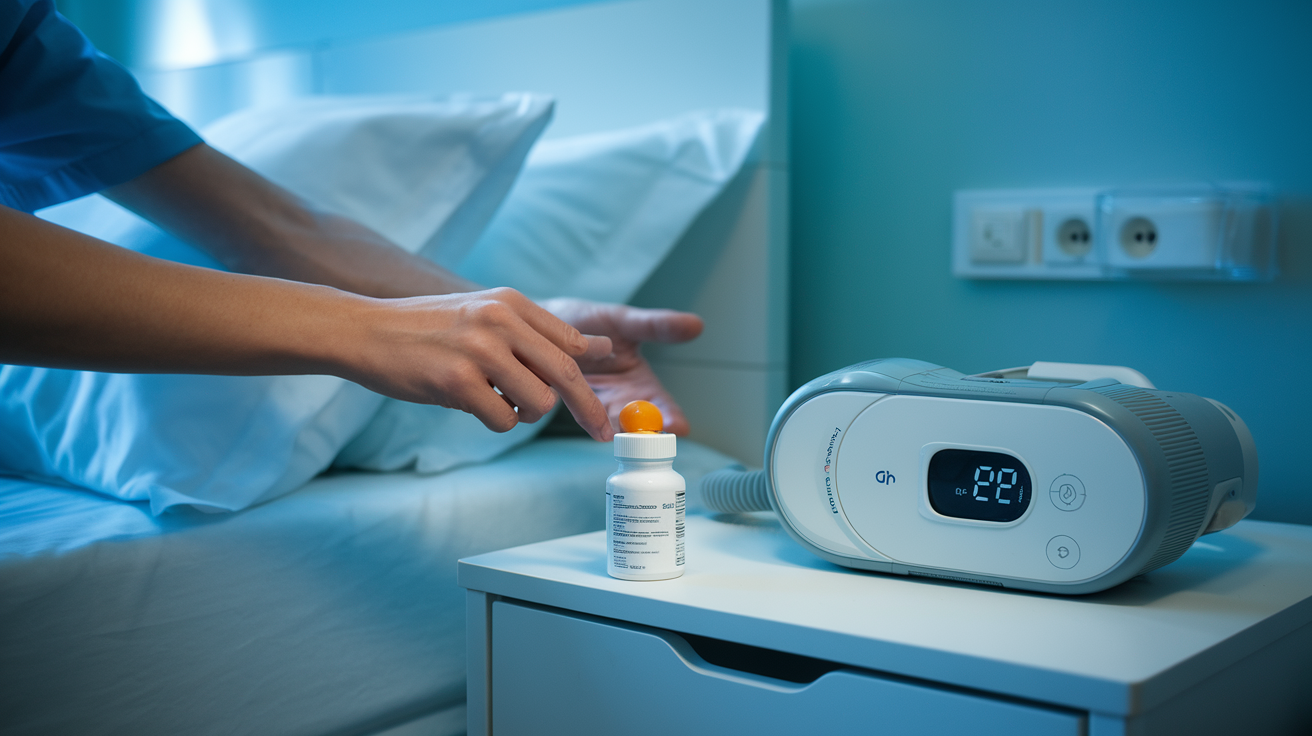

You've probably heard the buzz about new sleep apnea medications hitting the market. After decades of CPAP machines dominating treatment options, pharmaceutical companies are finally making real progress with pill-based therapies. But here's what everyone wants to know: do these medications actually work as well as CPAP?
I've been following this research closely, and the answer is more nuanced than you might expect. While these new medications show genuine promise for certain patients, they're not quite the CPAP replacement some people hoped for — at least not yet.
What These New Sleep Apnea Medications Actually Do
The most promising sleep apnea pills work by targeting the muscle tone in your upper airway. During sleep, the muscles that keep your throat open naturally relax — sometimes too much, causing the airway collapse that defines sleep apnea.
These medications aim to maintain enough muscle activity to prevent that collapse. The approach makes intuitive sense: if you can keep the throat muscles just active enough during sleep, you might avoid the breathing interruptions altogether.
Current research focuses on two main drug categories:
- Noradrenergic medications that increase muscle tone in the upper airway
- Antimuscarinic drugs that prevent excessive muscle relaxation during REM sleep
- Combination therapies that target multiple pathways simultaneously
What's fascinating here is that researchers have identified that sleep apnea isn't just about anatomy — it's also about how your nervous system controls these muscles during sleep.
CPAP Remains the Heavyweight Champion (For Good Reason)
CPAP therapy has earned its reputation as the gold standard because it works — and works consistently. When properly used, CPAP can reduce sleep apnea events by 85-95% in most patients. That's an impressive track record that's held up across thousands of studies.

Visual overview: Key facts about New sleep apnea pill vs CPAP effectiveness what patients should know
But (and this is a significant but), CPAP's Achilles' heel has always been compliance. Research consistently shows that 30-50% of patients struggle with long-term CPAP use. The mask discomfort, noise, travel hassles, and general disruption to sleep routines create real barriers.
Here's where the medication approach becomes compelling. Even if a pill is only 70% as effective as CPAP, it might deliver better real-world outcomes for patients who simply can't tolerate CPAP long-term.
The CPAP Reality Check
Anyone who's dealt with CPAP knows the daily reality can be challenging. You're managing mask fit, cleaning routines, travel considerations, and potential side effects like dry mouth or skin irritation. For some patients, these factors make consistent use nearly impossible — which means zero therapeutic benefit.
This context is crucial when evaluating new medications. Perfect adherence to a moderately effective treatment often beats poor adherence to a highly effective one.
How Do the Numbers Actually Stack Up?
Early clinical trials suggest that the most promising sleep apnea medications can reduce apnea-hypopnea index (AHI) scores by 40-60% compared to placebo. That translates to meaningful improvements for many patients, though it doesn't quite match CPAP's performance.
Here's what the research suggests about effectiveness:
- Mild sleep apnea: Medications may achieve similar outcomes to CPAP in some patients
- Moderate sleep apnea: Mixed results, with medications helping but rarely normalizing AHI scores completely
- Severe sleep apnea: Medications typically provide partial improvement but may not be sufficient as standalone therapy
The key insight I've found in reviewing this research is that patient selection matters enormously. Some people respond dramatically to these medications, while others see minimal benefit. Researchers are still working to identify the characteristics that predict good response.
Beyond the Numbers: Quality of Life Considerations
Effectiveness isn't just about AHI reduction. Many patients in medication trials report improvements in daytime sleepiness, morning headaches, and overall energy levels — even when their AHI doesn't normalize completely.
This suggests that for some patients, partial improvement with excellent adherence might be more valuable than theoretical complete treatment with poor compliance.
What About Side Effects and Safety?
CPAP therapy has minimal side effects for most patients — mainly comfort and convenience issues rather than medical risks. The new sleep apnea medications present a different risk-benefit profile.
Common side effects reported in trials include:
- Mild nausea (usually temporary)
- Dry mouth
- Occasional dizziness
- Sleep pattern changes during initial adjustment
Most patients tolerate these medications well, but any systemic medication carries more potential for interactions and side effects than the mechanical approach of CPAP therapy.
Your doctor will need to consider your other medications, medical conditions, and individual risk factors when evaluating whether these new treatments are appropriate for you.
The Financial Reality: Pills vs. CPAP Costs
Cost comparisons between medications and CPAP aren't straightforward. CPAP involves higher upfront equipment costs but relatively low ongoing expenses (mainly replacement supplies). Medications typically have lower startup costs but ongoing monthly expenses.
Insurance coverage for sleep apnea medications is still evolving. While most plans cover CPAP therapy once sleep apnea is diagnosed, coverage for newer medications may be more limited initially.
For patients considering various treatment approaches, it's worth exploring all options. Some people find that surgical interventions like Inspire therapy or procedures such as UPPP surgery provide long-term solutions that eliminate ongoing costs entirely.
Which Patients Might Benefit Most from Medication?
Based on current research, sleep apnea medications seem most promising for specific patient groups:
CPAP-intolerant patients who've genuinely tried to make CPAP work but can't achieve consistent use represent the most obvious candidates. For these individuals, partial improvement with excellent adherence beats no treatment at all.
Frequent travelers who struggle with CPAP portability might find medications more practical for maintaining consistent treatment.
Patients with mild to moderate sleep apnea appear to achieve better results than those with severe disease, though individual responses vary significantly.
What's interesting is that some patients might benefit from combination approaches — using CPAP at home but switching to medication during travel, for example.
When Medications Might Not Be the Answer
Patients with severe sleep apnea, significant anatomical obstructions, or complex medical conditions may not achieve adequate improvement with medications alone. In these cases, proven treatments like CPAP or surgical options might be more appropriate.
For those exploring surgical alternatives, resources like our sleep apnea surgery guides can provide valuable information about various procedures and their effectiveness.
How to Approach This Decision with Your Doctor
The choice between sleep apnea medications and CPAP isn't one-size-fits-all. Your sleep specialist will need to consider your specific situation, including:
- Severity of your sleep apnea
- Previous treatment experiences
- Other medical conditions and medications
- Lifestyle factors and preferences
- Insurance coverage and cost considerations
Many sleep medicine physicians are taking a "trial and monitor" approach with appropriate candidates — starting medication while carefully tracking symptoms and follow-up sleep studies to ensure adequate improvement.
If you're struggling with CPAP or haven't found a treatment approach that works for you, discussing these newer options with your doctor could be worthwhile. You can find qualified specialists through resources like our sleep apnea surgeon directory to explore all available treatment options in your area.
The landscape of sleep apnea treatment is evolving rapidly. While CPAP remains highly effective for patients who can use it consistently, these new medications are creating genuine alternatives for the first time in decades. That's exciting news for the millions of people who need effective sleep apnea treatment but haven't found an approach that works in their real-world lives.