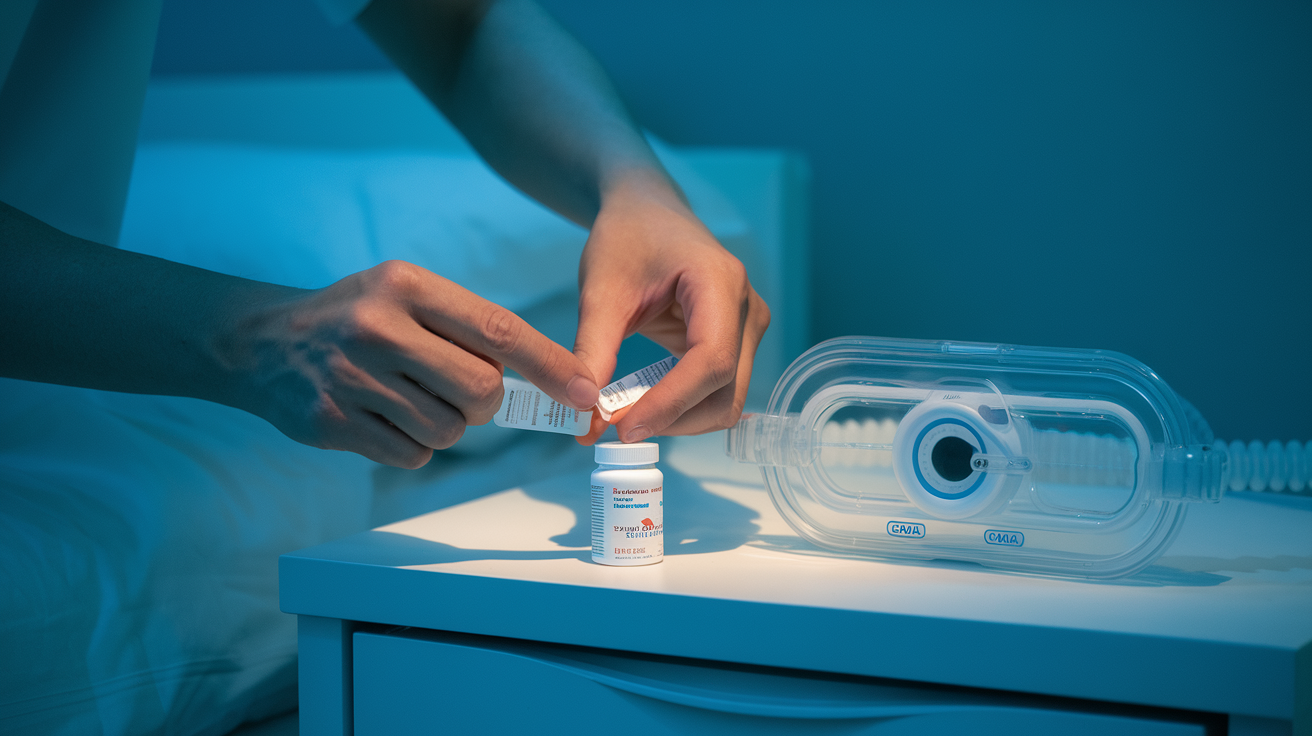

If you're navigating sleep apnea treatment options, you've probably wondered whether there's a simpler alternative to that bulky CPAP machine sitting on your nightstand. The idea of taking a pill instead of strapping on a mask every night sounds pretty appealing, doesn't it?
Here's what I've learned from years of following sleep apnea research: while we don't yet have a magic pill that works like CPAP therapy, there are medications that can help certain people with specific types of sleep apnea. But the story isn't as straightforward as you might hope.
What Are Sleep Apnea Pills Actually?
When people talk about "sleep apnea pills," they're usually referring to a few different categories of medications that can potentially help with sleep-disordered breathing. None of these work exactly like CPAP — they don't physically keep your airway open — but they might help in other ways.
The most promising developments have been around combination drug therapies. Research suggests that certain medications targeting neurotransmitters in the brain might help improve muscle tone in the upper airway during sleep. Think of it as giving your throat muscles a little extra help staying active when they'd normally relax too much.
There's also been interest in medications that can help with central sleep apnea — the less common type where your brain temporarily stops sending breathing signals. These work differently than treatments for obstructive sleep apnea, which is what most people have.
Current Medication Options
What's fascinating is how these medications target different aspects of the sleep apnea puzzle:
- Noradrenergic and antimuscarinic agents — These might help keep your airway muscles more active during sleep
- Carbonic anhydrase inhibitors — Sometimes used for central sleep apnea, though they come with their own side effects
- Stimulants — Occasionally prescribed to help with daytime sleepiness, but they don't address the underlying breathing problems
- Combination therapies — Some researchers are exploring how multiple medications might work together
But here's the thing — most of these are still being studied, and the results vary significantly from person to person.
How CPAP Therapy Actually Works
CPAP (Continuous Positive Airway Pressure) takes a completely different approach. Instead of trying to change what's happening inside your body, it uses air pressure to physically prevent your airway from collapsing.

Visual overview: Key facts about sleep apnea pill vs CPAP which treatment is right for you
Imagine your throat as a soft-walled tunnel. During sleep, the muscles relax and that tunnel can collapse or narrow, blocking airflow. CPAP acts like a gentle air splint, keeping that tunnel open all night long.
The effectiveness of CPAP is well-established — when used consistently, it can reduce apnea events from dozens or even hundreds per hour down to just a few. That's pretty remarkable when you think about it.
CPAP Success Rates and Reality
Research consistently shows that CPAP can be incredibly effective for most people with obstructive sleep apnea. The challenge isn't whether it works — it's whether people actually use it consistently.
Many patients struggle with the mask, the noise, or just the general inconvenience of the whole setup. Some develop skin irritation or feel claustrophobic. Others travel frequently and find it cumbersome to pack and set up their machine.
That's where the appeal of a pill becomes obvious. But effectiveness and convenience don't always align in sleep medicine.
Which Treatment Is More Effective?
This is where I need to be completely honest with you: CPAP therapy currently outperforms medications for most people with obstructive sleep apnea. The research on this is pretty clear.
CPAP can often bring your Apnea-Hypopnea Index (AHI) — the number of breathing interruptions per hour — down to normal levels. Most sleep apnea medications, even when they help, typically provide more modest improvements.
That said, effectiveness isn't just about numbers on a sleep study. If you can't tolerate CPAP therapy and stop using it, then a medication that provides partial improvement might actually give you better real-world results.
Who Might Benefit from Medications?
Certain people might be better candidates for medication approaches:
- Those with mild sleep apnea who've tried CPAP but can't tolerate it
- People with central sleep apnea components to their condition
- Patients who travel extensively for work
- Those who've had success with other treatments but need additional support
Your sleep specialist can help determine if you might fall into one of these categories. They'll consider your specific type of sleep apnea, severity level, and other health factors.
Side Effects and Practical Considerations
Every treatment comes with trade-offs, and both pills and CPAP have their challenges.
CPAP side effects are usually related to the physical device — dry mouth, skin irritation around the mask, or occasional stomach bloating if you swallow air. These are often manageable with adjustments to your equipment or settings.
Medications can have more systemic effects. Some people experience nausea, dizziness, or changes in appetite. Others might have interactions with medications they're already taking. And unlike CPAP, where you can immediately tell if it's working by how you feel, medication effects can be more subtle and take time to evaluate.
Cost Comparison
The financial picture is interesting too. CPAP requires a significant upfront investment, but then mainly ongoing costs for replacement supplies. Sleep apnea medications might seem cheaper initially, but monthly prescription costs can add up over time.
Insurance coverage varies for both options. Most plans cover CPAP therapy well, especially after a sleep study confirms your diagnosis. Coverage for sleep apnea medications can be more variable, depending on the specific drug and your insurance formulary.
When Surgery Might Be Worth Considering
Sometimes neither CPAP nor medications provide the right solution, and that's when surgical options become worth exploring. I've seen people find real success with procedures that address the physical causes of their airway obstruction.
Some surgical approaches can be quite effective. MMA surgery costs reflect the complexity of these procedures, but for the right candidate, jaw advancement surgery can provide lasting results. Similarly, UPPP surgery costs vary depending on your location and surgeon, but this soft tissue procedure helps many people reduce their dependence on CPAP.
If you're dealing with nasal issues that make CPAP difficult, procedures like septoplasty or turbinate reduction might help improve your CPAP tolerance while also providing some independent benefit.
The key is working with an experienced sleep surgeon who can evaluate your specific anatomy and sleep apnea pattern. You can find sleep apnea surgeons in your area who specialize in these types of procedures.
Making the Right Choice for Your Situation
So how do you decide between these options? Start by having an honest conversation with your sleep medicine doctor about your specific situation.
Consider these questions:
- How severe is your sleep apnea?
- Have you given CPAP therapy a fair trial with proper mask fitting and pressure adjustments?
- What aspects of CPAP are most problematic for you?
- Are you dealing with other health conditions that might affect medication choices?
- What's your lifestyle like — do you travel frequently, or do you have a consistent bedtime routine?
Sometimes the answer isn't choosing one treatment over another, but finding the right combination. Some people use CPAP most nights but have a backup medication for travel. Others might combine surgical intervention with CPAP therapy to reduce the pressure settings needed.
What's on the Horizon?
The field of sleep apnea treatment continues to evolve. Researchers are working on more targeted medications, improved CPAP technology, and innovative approaches like nerve stimulation devices.
Some of the most promising research involves medications that can target the specific mechanisms causing someone's sleep apnea. Rather than a one-size-fits-all approach, we might eventually have personalized medication regimens based on individual sleep study patterns and genetic factors.
But for now, CPAP remains the gold standard for most people with moderate to severe obstructive sleep apnea. Medications can play a supporting role or help specific subgroups, but they're not yet a wholesale replacement for proven therapies.
Getting Expert Guidance
Choosing between sleep apnea treatments isn't something you should do alone. Your sleep specialist understands the nuances of different approaches and can help you weigh the pros and cons based on your specific medical history.
If you're struggling with CPAP therapy, don't give up without exploring all your options. Sometimes simple adjustments to your equipment or trying a different mask style can make all the difference. Other times, alternative treatments or combinations of approaches might be worth considering.
Remember that untreated sleep apnea carries real health risks — increased risk of heart disease, stroke, and diabetes, plus the daily challenges of fatigue and poor concentration. The goal is finding a treatment you can stick with long-term, not just something that sounds convenient in theory.
Your journey to better sleep might involve trying different approaches before finding what works best for you. The important thing is working with knowledgeable healthcare providers who can guide you through the options and help you make informed decisions about your care.