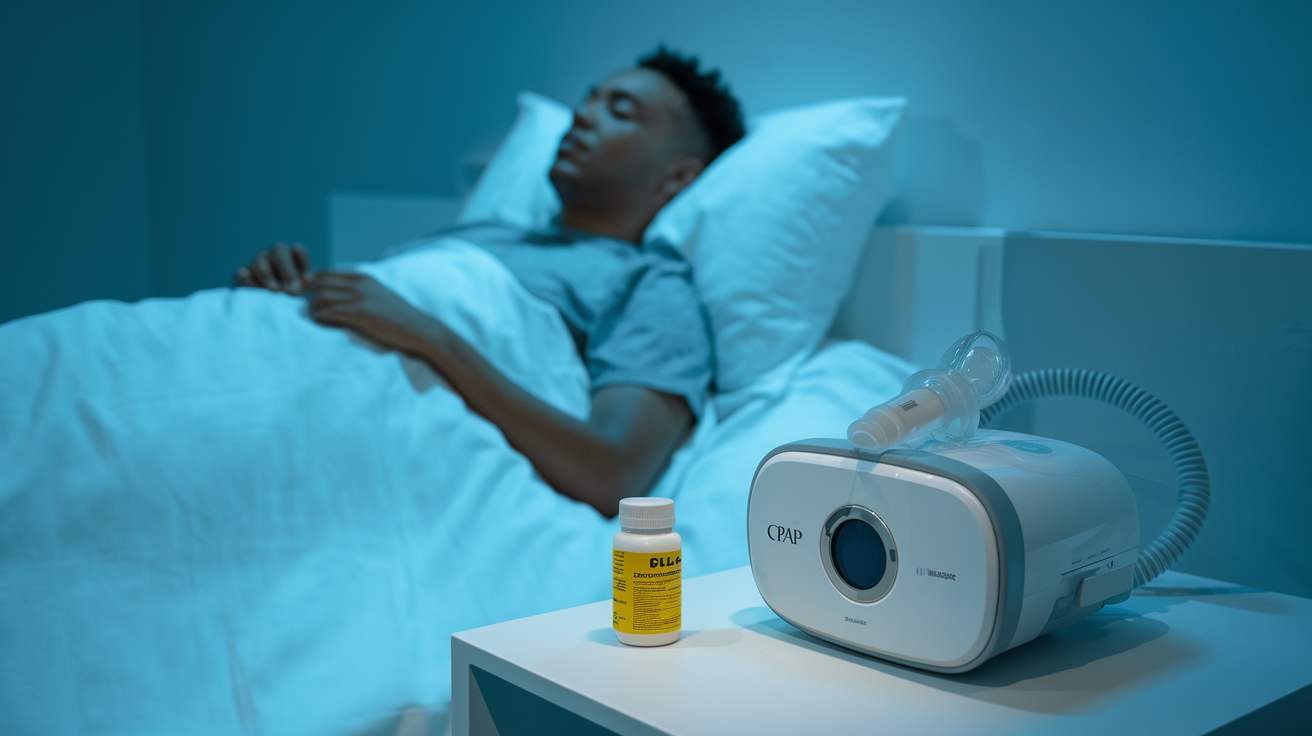

If you've been diagnosed with sleep apnea, you've probably found yourself staring at treatment options that seem worlds apart. On one side, there's the promise of a simple pill that could solve your breathing problems. On the other, there's CPAP therapy — that somewhat intimidating machine with tubes and masks that millions swear by.
I've spent years helping people navigate these choices, and here's what I've learned: the "pill vs CPAP" question isn't really about which one wins in a head-to-head battle. It's about understanding what each can (and can't) do for your specific situation.
What Are Sleep Apnea Pills Actually Doing?
Here's where things get interesting. When people talk about "sleep apnea pills," they're usually referring to a few different types of medications that approach the problem from various angles.
Stimulant medications like modafinil or armodafinil don't actually treat the apnea events themselves. Instead, they combat the crushing daytime fatigue that comes with poor sleep quality. Think of them as addressing the symptom rather than the cause — like taking aspirin for a fever without treating the underlying infection.
Then there are upper airway stimulators in pill form and medications that might help with specific contributing factors. Some research has explored drugs that could potentially reduce inflammation in airways or improve muscle tone, but we're still in relatively early stages with many of these approaches.
What's fascinating is that the pharmaceutical approach often works best as part of a broader strategy rather than a standalone solution.
The Reality Check on Pill Effectiveness
I've seen patients come in with high hopes about medication solving their sleep apnea completely. The truth is more nuanced than that.
Research suggests that while certain medications can significantly improve daytime alertness and quality of life, they typically don't address the root mechanical problem — your airway is still collapsing during sleep. Your Apnea-Hypopnea Index (AHI) might remain largely unchanged, even if you feel dramatically better during the day.
That said, feeling human again after months of exhaustion is nothing to dismiss lightly. For some people, managing the symptoms effectively can be life-changing, even if the underlying breathing interruptions continue.
CPAP Therapy: Why It's Still the Gold Standard
CPAP (Continuous Positive Airway Pressure) therapy takes a completely different approach. Instead of working around the problem, it directly addresses what's happening in your throat during sleep.

Visual overview: Key facts about sleep apnea pill vs CPAP therapy which works better
The machine creates a gentle stream of pressurized air that acts like a pneumatic splint, keeping your airway open throughout the night. When it works properly — and this is crucial — it can reduce your AHI to near-normal levels, meaning you're actually getting the restorative sleep your body desperately needs.
I've watched people transform their lives with CPAP therapy. We're talking about going from 40+ breathing interruptions per hour down to fewer than 5. That's not just symptom management; that's addressing the core issue.
But CPAP Isn't Perfect Either
Anyone who's tried CPAP knows it comes with its own challenges. The mask can feel claustrophobic initially. Some people struggle with air pressure that feels too strong or too weak. Then there's the noise (though modern machines are remarkably quiet), the dry mouth, occasional mask leaks, and the simple reality of sleeping tethered to a machine.
Here's what I find most telling: CPAP compliance rates hover around 60-70% long-term. That means roughly one in three people who could benefit significantly from CPAP therapy end up abandoning it.
Yet for those who stick with it, the results can be remarkable. Blood pressure improvements, better mood regulation, increased energy, and potentially reduced risk of cardiovascular complications.
Head-to-Head: What the Research Actually Shows
When we look at clinical effectiveness, CPAP therapy generally comes out ahead for treating the actual sleep apnea. Studies consistently show that properly used CPAP can:
- Reduce AHI to normal or near-normal levels in most patients
- Improve oxygen saturation during sleep
- Significantly reduce cardiovascular risks associated with untreated sleep apnea
- Restore normal sleep architecture over time
Medications, particularly stimulants, excel at:
- Improving daytime alertness and cognitive function
- Helping people function better at work and in daily activities
- Providing relief when CPAP isn't tolerated or feasible
- Serving as a bridge therapy while adjusting to other treatments
But here's where it gets complicated — effectiveness isn't just about what happens in a sleep lab. It's about what people can actually stick with in real life.
The Compliance Factor Changes Everything
A medication that's taken consistently might outperform CPAP therapy that's used sporadically. I've seen patients who achieve better overall outcomes with stimulant medications simply because they take them every day, compared to their previous pattern of using CPAP only 3-4 nights per week.
This is where individual factors become crucial. Your work schedule, travel frequency, sleeping arrangements, and personal tolerance all influence which treatment will work better for you specifically.
When Might Pills Be the Better Choice?
There are definitely scenarios where medication might be your best starting point or long-term solution.
If you have mild sleep apnea with primarily daytime symptoms, stimulant medications might provide excellent quality of life improvements with minimal hassle. Some people with AHI levels under 15 find that managing the fatigue is sufficient for their needs.
Frequent travelers often struggle with CPAP compliance due to the logistics of carrying equipment, dealing with different power outlets, and sleeping in unfamiliar environments. A daily pill eliminates these complications entirely.
People with certain anxiety or claustrophobia issues might find CPAP masks unbearable despite multiple attempts and different mask styles. Rather than going untreated, medication can provide meaningful symptom relief.
Sometimes medication works well as combination therapy. You might use CPAP most nights but rely on stimulants during particularly demanding work periods or when traveling.
When CPAP Is Clearly Superior
For moderate to severe sleep apnea (AHI over 15, and especially over 30), CPAP therapy typically provides more comprehensive benefits. The cardiovascular risks associated with untreated moderate-severe sleep apnea are significant enough that symptom management alone may not be sufficient.
If you're already dealing with cardiovascular issues — high blood pressure, heart disease, or stroke risk — your doctor will likely push harder for CPAP compliance because of its proven protective effects.
People with severe daytime symptoms that affect safety (like falling asleep while driving) often need the comprehensive sleep restoration that CPAP provides, not just alertness enhancement.
The Bigger Picture: Beyond Pills and CPAP
Here's something worth considering — sometimes the "pills vs CPAP" question misses other effective options entirely.
Surgical interventions can be game-changers for the right candidates. Inspire therapy offers a CPAP alternative that's particularly appealing to people who can't tolerate masks. Various surgical procedures like UPPP surgery or MMA surgery might address anatomical issues causing your sleep apnea.
Sometimes the issue isn't just sleep apnea but related problems like severe nasal congestion. Procedures like septoplasty or turbinate reduction might improve CPAP tolerance or even reduce apnea severity.
The key is working with a sleep specialist who can evaluate your complete picture — not just your AHI number, but your lifestyle, other health conditions, and treatment preferences.
Making the Decision That's Right for You
I've found that the most successful patients approach this decision systematically rather than hoping for a magic bullet.
Start by having an honest conversation with your sleep doctor about your specific situation. How severe is your sleep apnea? What symptoms bother you most? What's your lifestyle like? Have you given CPAP a genuine trial with proper mask fitting and pressure adjustments?
Consider your long-term health goals too. If you're looking for comprehensive treatment that addresses both symptoms and underlying health risks, CPAP or surgical options might be worth the initial adjustment period. If you need functional improvement quickly and can accept ongoing monitoring for cardiovascular risks, medication might be appropriate.
Remember that this doesn't have to be a permanent, irreversible choice. Many people try one approach, learn from that experience, and then make adjustments or try combination therapies.
Questions to Discuss With Your Doctor
Before making your decision, consider asking your healthcare provider:
- What's my exact AHI, and how does that influence treatment recommendations?
- If I choose medication, how will we monitor for cardiovascular risks?
- What's a realistic timeline for adjusting to CPAP therapy?
- Are there surgical options that might eliminate the need for either pills or CPAP?
- How do my other health conditions influence the best choice?
You can explore more treatment options and find specialists in your area through our comprehensive guides or provider directory.
The Bottom Line
Neither sleep apnea pills nor CPAP therapy is universally "better" — they're different tools that excel in different situations.
CPAP therapy offers more comprehensive treatment of the underlying sleep apnea, with proven benefits for cardiovascular health and sleep quality. But it requires commitment to nightly use and overcoming initial adjustment challenges.
Medications can provide excellent symptom relief and quality of life improvements, especially for people with milder sleep apnea or those who can't tolerate CPAP. However, they typically don't address the root cause or provide the same cardiovascular protection.
The "better" choice is the one you'll actually stick with and that addresses your most pressing concerns. Sometimes that's CPAP, sometimes it's medication, and sometimes it's a combination approach or exploring surgical alternatives entirely.
What matters most is not going untreated. Sleep apnea affects too many aspects of your health and daily life to simply hope it improves on its own. Whether you end up with a CPAP machine, a daily pill, or something else entirely, taking action is what counts.