
Medically Reviewed by Dr. Igor I. Bussel, MD
Board-Certified Physician | Last updated January 2026
Introduction: Navigating Your Treatment Options
For patients with obstructive sleep apnea (OSA) who can't tolerate CPAP therapy, two main alternatives exist: oral appliances and surgery. Each has distinct advantages and is best suited for different patient profiles. This guide helps you understand which option may be right for you.
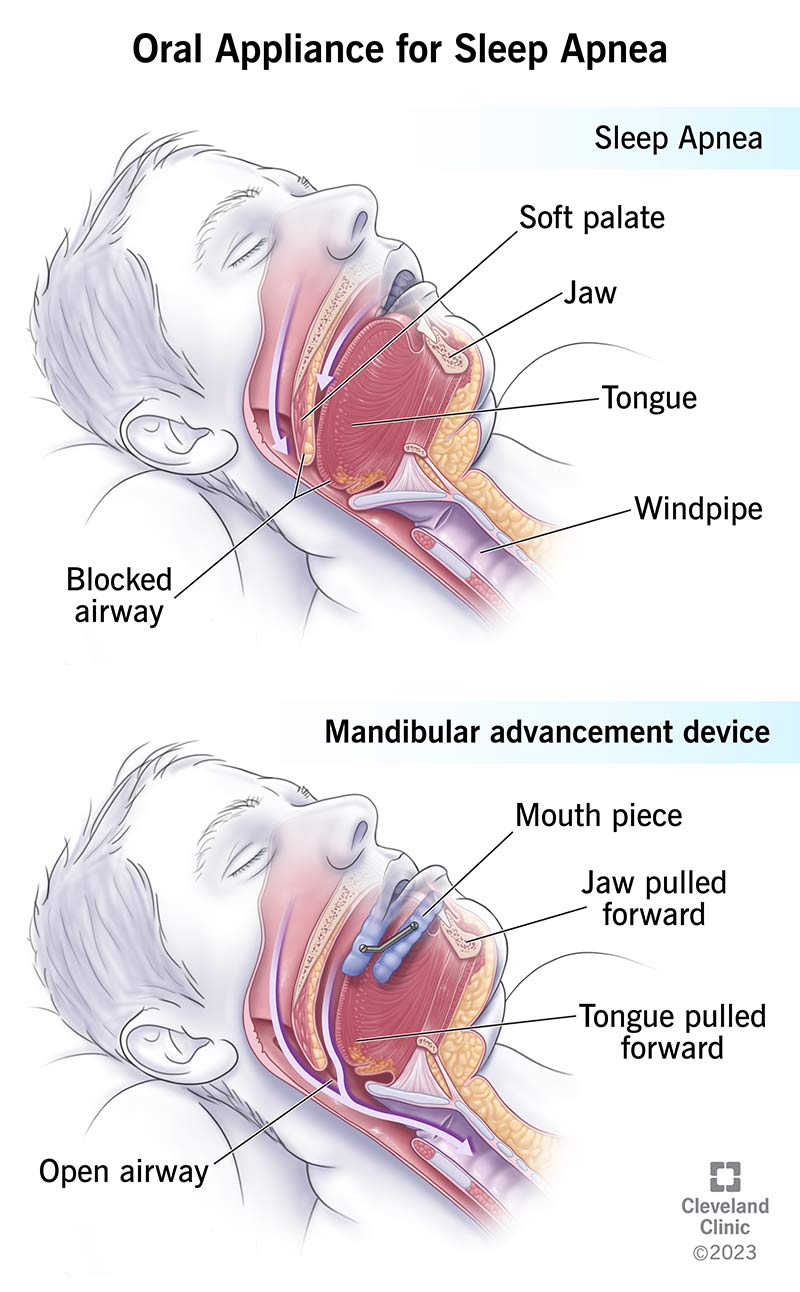
How oral appliances work
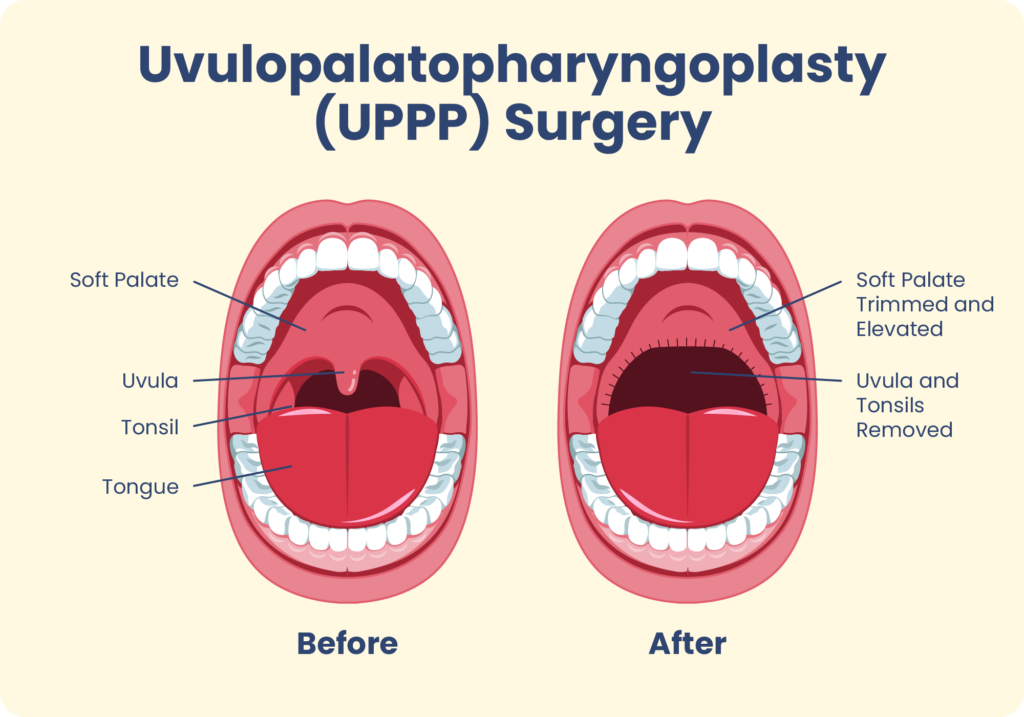
UPPP surgery illustration
Oral Appliance Therapy
Oral appliances are custom-fitted dental devices worn during sleep. They work by repositioning the lower jaw or tongue to keep the airway open.
Types of Oral Appliances
Mandibular Advancement Devices (MADs)
Push the lower jaw forward to open the airway. Most common type.
Tongue-Stabilizing Devices (TSDs)
Hold the tongue forward to prevent airway obstruction.
The Process
- 1 Consultation with a dentist trained in sleep medicine
- 2 Dental impressions and custom fitting
- 3 Adjustment period (may take several weeks)
- 4 Follow-up sleep study to verify effectiveness
Pros
- ✓ Non-invasive
- ✓ Easy to use and portable
- ✓ Comfortable for many patients
- ✓ Effective for mild to moderate OSA
- ✓ Lower cost than surgery
- ✓ Reversible - can stop anytime
Cons
- ✗ Less effective for severe OSA
- ✗ Potential jaw pain or discomfort
- ✗ Possible bite changes over time
- ✗ Teeth shifting in some cases
- ✗ Requires nightly use
- ✗ Needs replacement every 2-5 years
Cost: $1,500 - $3,000 for custom-fitted devices. Often covered by insurance with documented CPAP failure.
Surgical Interventions
Surgery aims to permanently address the anatomical causes of airway obstruction. Multiple procedures exist, each targeting different areas.
UPPP (Uvulopalatopharyngoplasty)
Removes excess tissue from soft palate and pharynx. Success rate: 40-60%
Inspire Therapy (Hypoglossal Nerve Stimulation)
Implantable device stimulates tongue movement. 79% AHI reduction reported.
MMA (Maxillomandibular Advancement)
Repositions jaws forward to enlarge airway. Success rate: 80-90%
Nasal Surgery (Septoplasty, Turbinate Reduction)
Addresses nasal obstruction. Often combined with other procedures.
Pros
- ✓ Potential for permanent solution
- ✓ No nightly device required
- ✓ Can be highly effective for specific anatomy
- ✓ Multiple options for different obstruction sites
Cons
- ✗ Invasive with surgical risks
- ✗ Pain and recovery time
- ✗ Not always successful
- ✗ Higher upfront cost
- ✗ Potential complications
Side-by-Side Comparison
| Feature | Oral Appliance | Surgery |
|---|---|---|
| Invasiveness | Non-invasive | Minimally to highly invasive |
| Effectiveness | High for mild-moderate OSA | 50-90% depending on procedure |
| Recovery Time | Minimal adjustment period | Weeks to months |
| Cost | $1,500 - $3,000 | $6,000 - $100,000+ |
| Side Effects | Jaw discomfort, bite changes | Pain, bleeding, complications |
| User Compliance | High (easy to use) | N/A (one-time procedure) |
Making the Right Choice
Consider an Oral Appliance if:
- • You have mild to moderate OSA
- • You prefer non-invasive treatment
- • You travel frequently
- • You have healthy teeth and gums
- • You want a lower-cost option first
Consider Surgery if:
- • You have moderate to severe OSA
- • Oral appliances haven't worked
- • You have identifiable anatomical issues
- • You want a potentially permanent solution
- • You're healthy enough for surgery
Important Note
The decision between surgery and oral appliances should be made with a board-certified sleep physician and/or ENT surgeon who can evaluate your specific anatomy, OSA severity, and overall health. Many patients try oral appliances before considering surgery.
Frequently Asked Questions
Is surgery a guaranteed cure for sleep apnea?
No. Success rates vary by procedure and individual anatomy. Some patients may need multiple surgeries or continued treatment with CPAP or an oral appliance.
How long do oral appliances last?
Custom-fitted oral appliances typically last 2-5 years with proper care. They may need adjustments over time as your mouth changes.
Will insurance cover these treatments?
Most insurance plans cover both oral appliances and surgery when deemed medically necessary, typically after documented CPAP failure. Coverage varies by plan.
Explore Your Treatment Options
Connect with sleep apnea specialists to discuss the best treatment for your needs.
Find a Specialist